
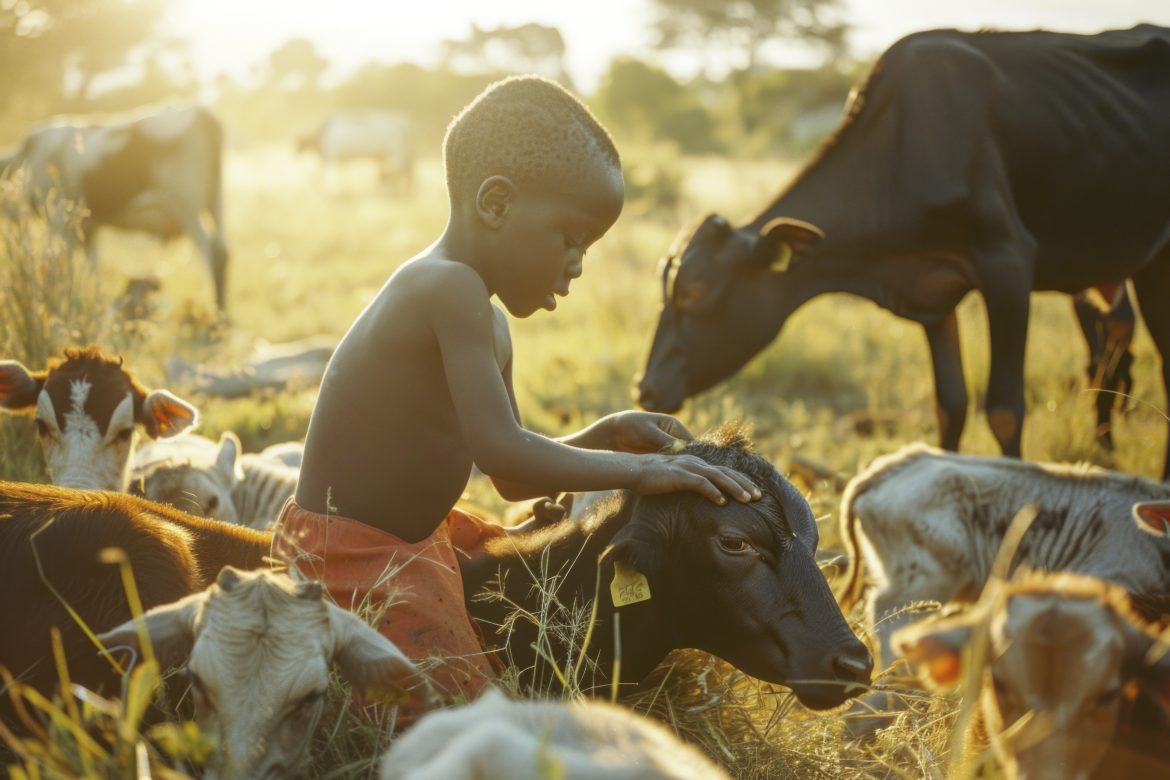
KENYA
Currently the sector provides income and employment to over 1.5 million households across the dairy value chain (farmers, collectors, processors, traders, input and service providers, etc.). The country has around 6.1 million dairy cows, producing about 607 kg/year/cow, and a total annual production around 3,7 million kg of milk. Different feeding systems are present in Kenya free grazing, semi zero-grazing (with improved pastures) and zero-grazing. Kenya’s dairy industry is private sector driven. In terms of nutrition and food security, almost all Kenyans consume milk on a daily basis (about 98 kg /capita/year in milk equivalent). The industry’s growth and competitiveness are constrained by low productivity at farm level, seasonality in milk production, milk quality issues, a huge knowledge and skills gap and lack of inclusiveness in the dairy value chain. Kenya’s dairy sector is known for its innovations in communication technology for the benefit of small farmers. The three dairies involved in the project are:
Mukurweini Wakulima Dairy Ltd
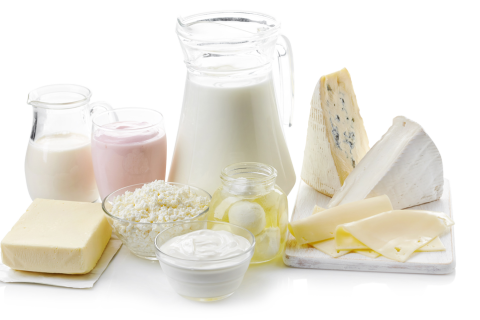
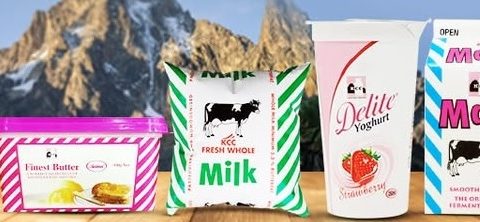
Mukurweini Wakulima Dairy ltd has a work force of 300 employees including permanent and casual workers. Currently, the processor has a membership of 7,400 farmers who are currently supplying 7,000 litres of milk per day. Currently, the milk supply is low because of the current drought that the area has been experiencing. The products produced include Royal fresh milk, Royal fresh yourghut and cheese. Mukurweini Wakulima Dairy main market for its milk products is Nairobi. Besides milk processing, the processor have a wing known as Bora feeds that produces animal concentrates.
New Kenya Cooperative Creameries Ltd (New KCC Ltd)
New KCC Ltd operates since 1908 and is the second largest milk processor in Kenya. New KCC has a daily milk intake of 350,000 kg of milk collected from five main collection areas (clusters) Dandora, Eldoret, Miritini, Nyahururu and Sotic. New KCC Ltd has access to a wide network of milk collection centres in 22 milk cooling plants & processing factories as well as over 30 satellite milk coolers, with plans already underway to add 20 new coolers in milk producing areas where new milk collection centres have already been identified across the country. Its core business has been the procurement of high quality raw milk which is then processed, packaged and marketed as milk and milk products.
Happy Cow Ltd
Happy Cow Ltd is a milk processor from Nakuru that started operations in 1996 following the liberalization of the Kenyan dairy sector. It started off with a daily milk intake of 100 litres a day and was primarily focused on bringing Dutch cheese making expertise to the Kenyan market. In 2004, Happy Cow Ltd become a fully-fledged dairy manufacturer producing cheeses and fermented dairy products such as yoghurts and mala. It supplies leading supermarkets, restaurants and hotels nationwide, and also exporting some of its products within the East African Community. The company has 125 staff and has grown its daily raw milk intake to about 9,000 litres per day which is amongst others sourced from Olenguruone Dairy Farmers Co-operative Society.
Challenges
- Mukurweini Wakulima Dairy Ltd: Adaptation of cow management to climate change ; Genetic improvements (cows that can resist drought with high milk yield and reasonable feeding needs due to land scarcity) ; include the youth in milk production ; improving milk quality and safety.
- New KCC Ltd : (i) to make a strong dairy chain and to improve interaction between the various chain actors, (ii) to increase competitiveness in terms of costs along the chain, (iii) to promote environmentally friendly practices such as the use of biogas, (iv) and to build ICT platform as a source of data on feeding, breeding, and for farm support.
- Since 2014, Happy Cow has been piloting an approach to improve the quality of milk collected from smallholder dairy farmers through a Quality Based Milk Payment System (QBMPS).
- https://www.africa-milk.org/study-sites/kenya



Your website is great because it’s about the dairy industry and Kenya.
Kenya Milk Kenya Dairy